

Behind this growth lies a less visible but vital fact: fabs have high demands and expectations for their equipment. Processes such as diffusion, oxidation, annealing, and deposition rely on furnaces to maintain precise temperature uniformity in every cycle.
Building on decades of expertise, Kanthal’s heating technology offers precise temperature uniformity, repeatability, and predictability, backed by a legacy of credibility.
From MRL to Kanthal
In 1998, Sandvik AB, then Kanthal's parent company, acquired MRL Industries, a California-based maker of heating elements for diffusion and LPCVD furnaces in the electronics sector. The business was later branded as Sandvik Thermal Process, and by 2021 it had been fully reorganized and rebranded as Kanthal. The MRL name lives on in Kanthal's semiconductor heating range, with legacy products familiar to engineers: Aztec, Helix, Helix II, Black Max, and Magna SW in North America, and White John in Europe.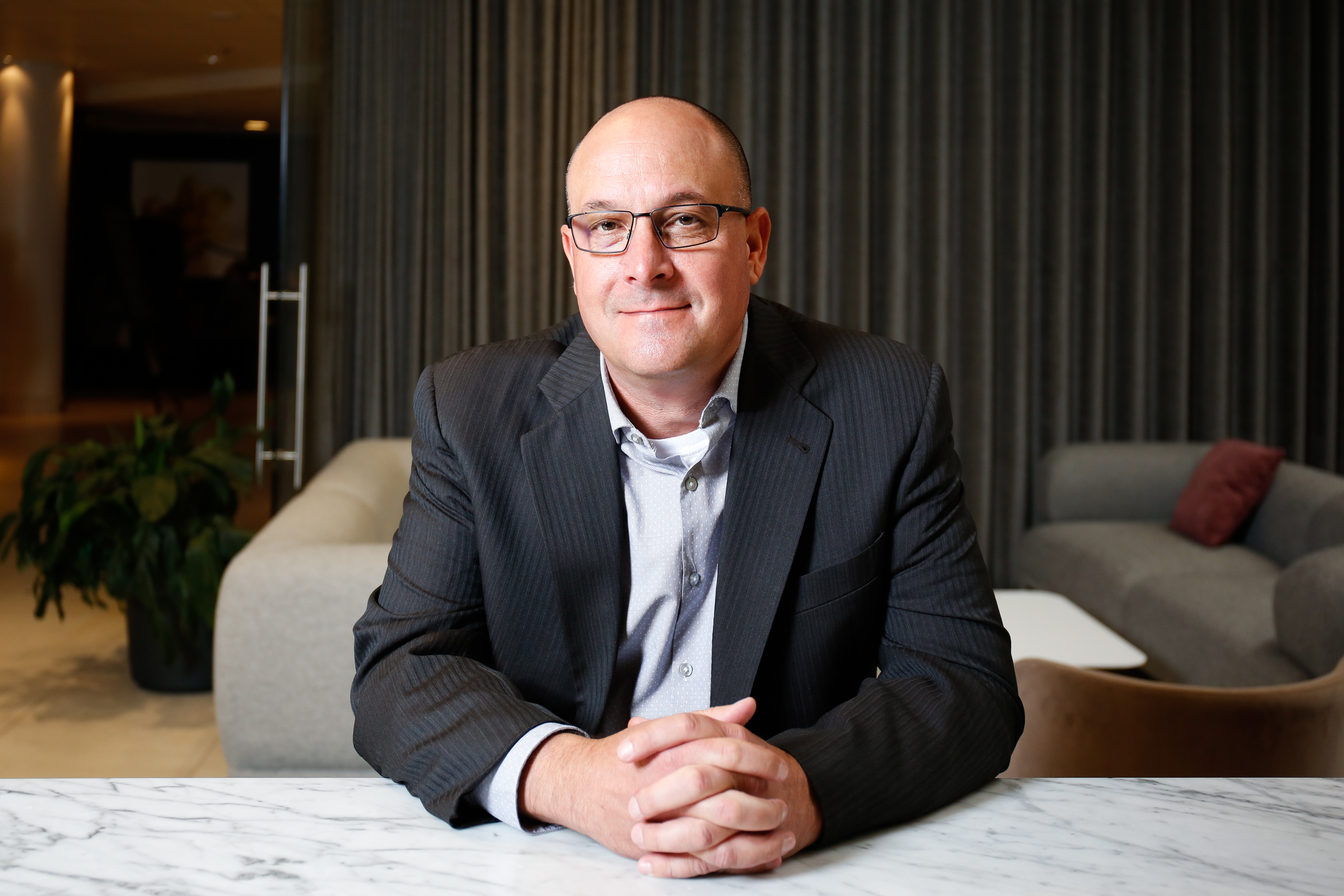 Tyke Johnson, Product Line Manager, Kanthal.
“Kanthal offers decades of expertise in materials science, while MRL provides practical experience in designing furnaces and thermal systems. Together, their combined histories address both challenges: developing materials that endure extreme demand and engineering the products around them,” says Tyke Johnson, Product Line Manager at Kanthal.
Consistency is the whole argument
Ask Johnson what truly differentiates one thermal supplier from another, and you'll find it's not just about specs or chemistry.
With a global presence and two-site manufacturing capabilities, we consistently meet the demands of a geographically clustered industry.
This adds significant value considering the industry's structure. Semiconductor fabs tend to cluster by region, mainly in a few countries, but the equipment they use comes from multiple locations.
For example, a fab using Fibrothal® heating elements produced at one Kanthal location can trust that an identical element from another site will perform equally well after installation. Johnson states that years of careful manufacturing practices and standardized quality controls across all Kanthal facilities ensure this consistency.
The product line behind the claim
Kanthal’s Fibrothal® portfolio includes light- and heavy-gauge variants, each tailored to specific furnace applications. Light-gauge elements are optimized for LPCVD processes, which require rapid temperature adjustments and precise control, typically at mid- to low temperatures. Conversely, heavy-gauge elements are designed for high-temperature atmospheric processes, where maintaining consistent, reliable heat over extended periods is more important than quick response.
Across both horizontal and vertical furnace designs, and across various brands and configurations, the range spans operating temperatures from 300 to 1,350°C (572 to 2,462°F).
Kanthal's role extends to the raw materials behind the products: alloy families, including Kanthal® FeCrAl, supplied in wire and strip form to manufacturers building diffusion cassettes, furnace components, and other parts exposed to sustained heat and repeated mechanical stress.
Working with customers, not just shipping to them
Johnson emphasizes that Kanthal is not merely a parts supplier. Instead, he explains that thermal requirements differ across tools, processes, and production scales. His approach treats each customer's unique challenge as a collaborative problem, working directly with equipment manufacturers and fabs to develop tailored solutions based on actual needs rather than offering generic answers.
This distinction is especially important in this industry. When a fab chooses Kanthal, it's not just purchasing a component; it's committing to a thermal component capable of enduring demanding conditions and high-stakes operation. Johnson sees Kanthal's role as a partnership that extends far beyond the initial delivery.
Looking ahead, demand for semiconductor manufacturing facilities is expected to increase. To meet this demand, Kanthal offers Fibrothal® heating elements that deliver stable, repeatable heat during critical thermal processes. For furnace manufacturers, we provide high-temperature materials engineered for longevity and built to withstand years of continuous operation. At the heart of our approach is a principle we have championed for decades: proper heat management guarantees consistent performance today and tomorrow, reinforcing reliability at every step.